Honoring the lineage of herbal wisdom—and the unseen labor that sustains us
This is not just a story about herbs—it is a story about whose knowledge is preserved, whose labor is seen, and whose care sustains us.
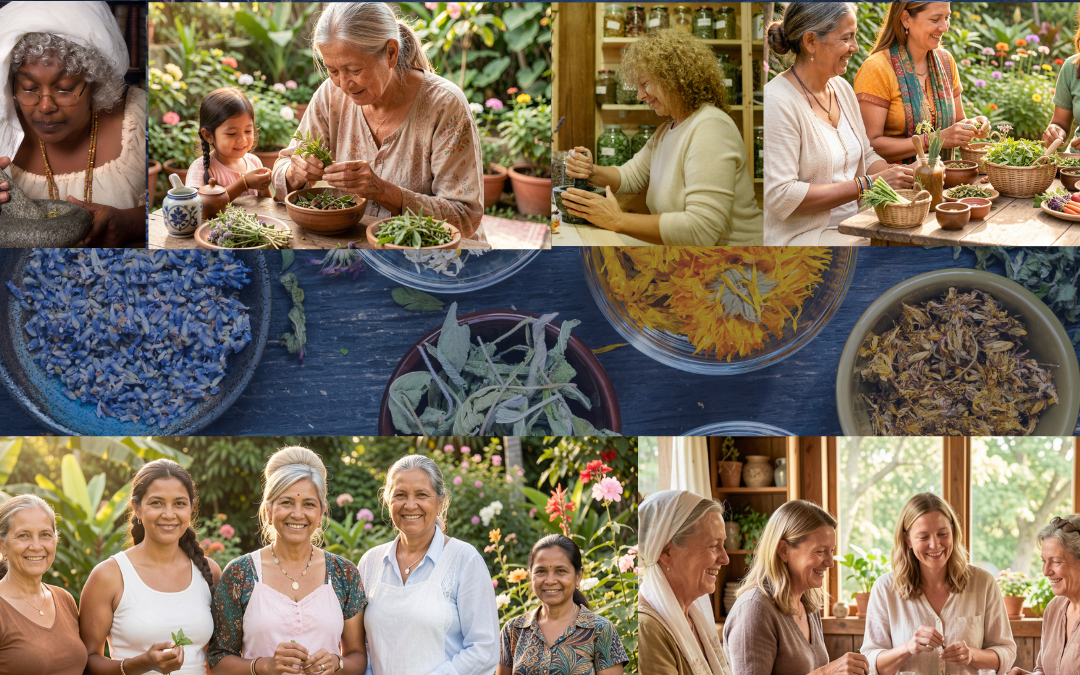
Much of what we now call modern herbalism did not begin in laboratories, universities, or wellness brands. It was carried forward through kitchens, gardens, and sickrooms—most often by women whose work was practical, relational, and deeply rooted in care.
Herbal knowledge was not abstract. It lived in the hands that brewed teas, poulticed wounds, soothed fevers, and fed families. It was shaped by close observation, seasonal rhythms, and lived experience—passed from mother to daughter, aunt to neighbor, elder to apprentice. This work rarely bore formal titles, yet it sustained communities for generations.
During Women’s History Month, it feels necessary to pause and acknowledge the women who preserved, protected, and advanced herbal wisdom at times when it was dismissed, marginalized, or extracted without recognition.
When Medicine Narrowed Its Lens
Herbs were humanity’s first medicine. Yet with the rise of modern scientific medicine, herbal and traditional healing practices were increasingly relegated to the realm of folklore or pseudoscience. Scientific medicine brought undeniable advances—rigor, lifesaving interventions, and powerful tools for acute care. But its narrow focus on what could be measured, patented, and standardized also dismisses lived experience,
Until the late 1990s, most medical research was conducted primarily on white male bodies and generalized to everyone else.
relational healing, and long-term quality of life.
For many, this has left a growing sense that the medical establishment is not always deeply invested in well-being, but rather in disease management.
One stark example: until the late 1990s, most medical research was conducted primarily on white male bodies and generalized to everyone else. This oversight contributed to the tragic reality that women were—and still are—more likely to die from heart attacks because their symptoms often present differently and go unrecognized, delaying life-saving treatment. This was not a failure of intelligence, but of imagination—of who was considered worth studying, listening to, and believing.
Herbal traditions persisted in this gap, tending to everyday needs—rest, digestion, wellness, and ease—through knowledge passed hand-to-hand, most often by women. This wisdom lived on through plants that served lived experience, like chamomile for calming, black cohosh for women’s rhythms, rosemary for remembrance, and feverfew for relief.
Women Who Kept the Thread Unbroken
Within this lineage, certain women stand out not because they claimed authority, but because they shared generously.
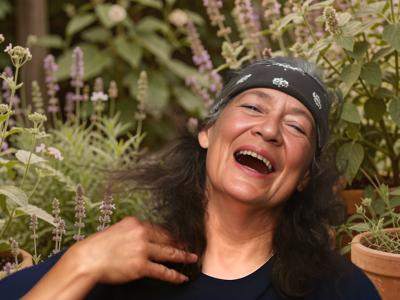
Susan Weed has spent decades teaching accessible, Earth-honoring herbal practices, particularly around women’s health. Her work emphasizes nourishment over force, sovereignty over dependency, and trust in the body’s innate wisdom.
Susan is often credited with saying that “The herbs we need most tend to grow within twenty-five miles of where we live” —a reminder that healing is local, relational, and ecological.
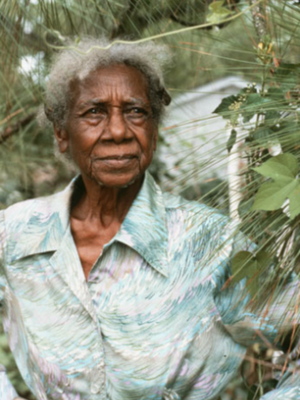
In eastern North Carolina, Emma Williams Dupree (1897–1996), known as Fountain’s herbalist and healer, carried this same thread forward in her own quiet way. Born to sharecroppers in Falkland and later living in Fountain, Dupree worked with roots, stems, and flowers long before terms like “holistic healing” or “eco-therapy” entered common language. She gathered mullein, sassafras, rabbit tobacco, sweet flag, and white mint from the land around her, preparing remedies not from textbooks but from lived knowledge shaped by African American, Native, and rural Southern traditions.
Local physicians recognized her skill; community members sought her counsel. In 1992, she received the North Carolina Heritage Award in recognition of her life’s work. Emma did not build a brand.
She tended a yard, a community, and a body of knowledege that might otherwise have disappeared. Her practice reminds us that herbal wisdom in America was never abstract—it was embodied, relational, and rooted in place.
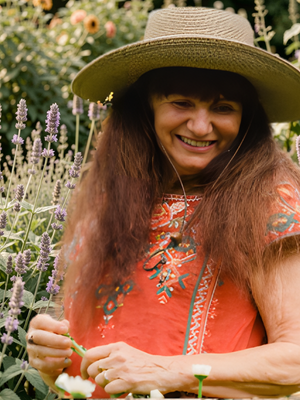
Rosemary Gladstar, a pioneer of modern community herbalism, helped bring herbs back into everyday life through teaching, writing, and generous formula sharing. One of her most well-known creations—Fire Cider—was offered freely as a gift to the herbal community.
Its later commercialization sparked important conversations about consent, attribution, and respect—particularly when women’s work becomes profitable only after being separated from its relational roots.
This pattern is not new. Women’s knowledge has often been absorbed into systems that reward extraction over care. And yet, the work continues—quietly, steadily, and generously—in kitchens, gardens, and communities around the world.
When knowledge rooted in relationship is removed from its community context and trademarked, something essential is lost.
Honey, Bees, and Sacred Relationship
The name Melissa (lemon balm) comes from the Greek word for honeybee, and anyone who has watched bees gather around this herb can see how fitting the name is.
In ancient Greek traditions, the Melissae were priestesses who honored bees as sacred messengers between worlds. Across cultures, bees were widely recognized as sacred beings. In ancient Egypt, bees were believed to be emanations of the sun god Ra. In Minoan Crete, a revered “Bee Goddess” is known through enduring iconography rather than a written name. In Celtic traditions, bees were seen as messengers between realms, and beekeepers often held ritual and cultural roles within their communities.
Honey was not viewed as simply food; it was medicine, offering, and symbol of community interdependence. Bees remind us that nourishment is collective, and survival depends on cooperation.
What the Lineage Teaches Us
Bees do not survive alone. Neither do people. Herbal traditions, like ecosystems, thrive through reciprocity, respect, and care.
To offer a cup of tea to a distressed friend.
To pass along a beloved recipe, handed down.
To carry forward knowledge shaped by lived experience.
To care for a stranger in need.
To tend the community.
These are not small acts. They are the quiet rhythms of care: practiced across generations, often without recognition, yet essential to survival and growth.
Herbs have been in a relationship with us since the beginning, offering nourishment and medicine. When we work with them thoughtfully, we step back into that lineage—not as consumers, but as participants in a living exchange that sustains both people and place.
And that lineage is not only history. It lives here.
In North Carolina, where damp winter air settles into the body and the soil still remembers what has grown in it, we continue to work with roots and leaves much as Emma Dupree once did—attentive to season, attentive to place.
In colder months, we often return to a simple combination: astragalus root for steady resilience, a few dried elderberries for seasonal support, ginger for warmth, and a pinch of thyme from the garden when breath feels tight. Nothing elaborate. Nothing forceful. Just roots simmered slowly, berries softened in hot water, warmth carried through the body.
To prepare a single cup, simmer:
-
½ teaspoon astragalus root
-
2–3 dried elderberries, lightly crushed
-
¼ teaspoon dried ginger
-
A pinch of thyme
in eight ounces of water for ten to fifteen minutes. Strain. Add a little honey if desired.
Sip slowly.
Not as medicine in the dramatic sense.
But as participation.
This is how the thread remains unbroken.
Coming Next Month
That Green Lawn, and the Cost of Perfection
In honor of Earth Day in April, our next article will explore how cultural ideas of the “perfect lawn” reshaped our relationship with plants once known as medicine—and how herbicides, insecticides, and ecological disconnection affect human health, pollinators, and local ecosystems. We’ll also look at how relearning to see “weeds” differently may be part of restoring balance.
Sometimes healing begins not with adding something new, but with changing how we see what is already here.

Leslie Rice is a staff writer for the Greensboro Holistic Collective and founder of Botanic Aromatics. Her writing reflects on plants, community, and the quiet work of care that sustains holistic life in North Carolina.
Disclaimer: The information shared in Greensboro Holistic Collective posts is intended for educational and informational purposes only. It is not a substitute for professional medical, mental health, or legal advice, diagnosis, or treatment. Always seek the guidance of a qualified healthcare provider or professional with any questions you may have regarding your health, well-being, or specific situation. Never disregard or delay seeking professional advice because of information you read here. Greensboro Holistic Collective does not endorse any specific practitioners, services, or products mentioned, and participation in any activities is at your own discretion.
Join Our Community Newsletter
Local events, wellness insights, and offerings—occasional, thoughtful, spam-free.
We respect your privacy. Privacy Policy